How to Design a Home That Feels Calm, Not Cold
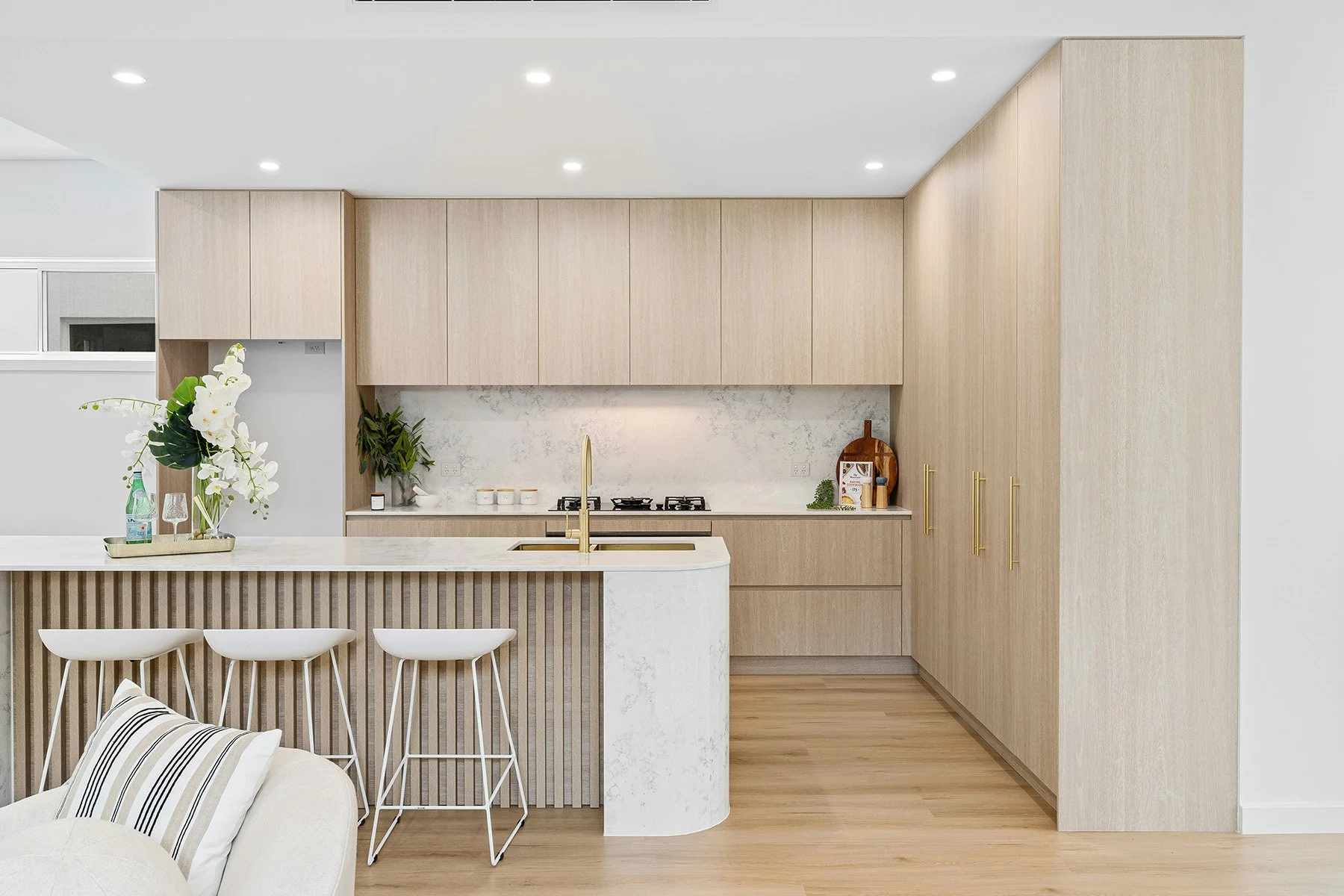
There’s a difference between minimal and empty.
The most beautiful interiors feel intentional, layered, and lived in, without ever feeling overwhelming. The goal isn’t to remove personality. It’s to remove noise.
Here’s how we design spaces that feel calm without feeling flat.
1. Start with Tone, Not Trend
Instead of choosing a “style,” begin with a feeling.
Do you want the space to feel:
• Grounded and earthy
• Light and airy
• Textural and warm
• Structured and architectural
When we design from emotion first, the materials follow naturally. This prevents a space from feeling like a Pinterest board and instead makes it feel deeply personal.
2. Limit the Colour Palette
Calm spaces rarely rely on contrast.
A restrained palette, often built around warm neutrals, soft whites, muted greens, or warm timber tones, creates cohesion. When every element speaks the same visual language, the eye can rest.
This doesn’t mean everything matches. It means everything belongs.
3. Layer Texture, Not Clutter
Texture is what prevents minimal interiors from feeling sterile.
Think:
• Limewashed walls
• Natural linen curtains
• Brushed brass hardware
• Travertine or honed stone
• Wool or jute rugs
When materials have depth, you don’t need excess decoration.
4. Consider Negative Space
One of the most powerful design tools is restraint.
Not every wall needs art. Not every corner needs furniture. Space allows your key pieces to breathe. It also creates a subtle sense of luxury.
5. Design for the Way You Live
True calm comes from functionality.
Storage that works. Lighting that supports different moods. Layouts that make daily routines feel seamless.
When a home functions beautifully, it naturally feels peaceful.
Interested in working together?
Let’s begin the conversation.